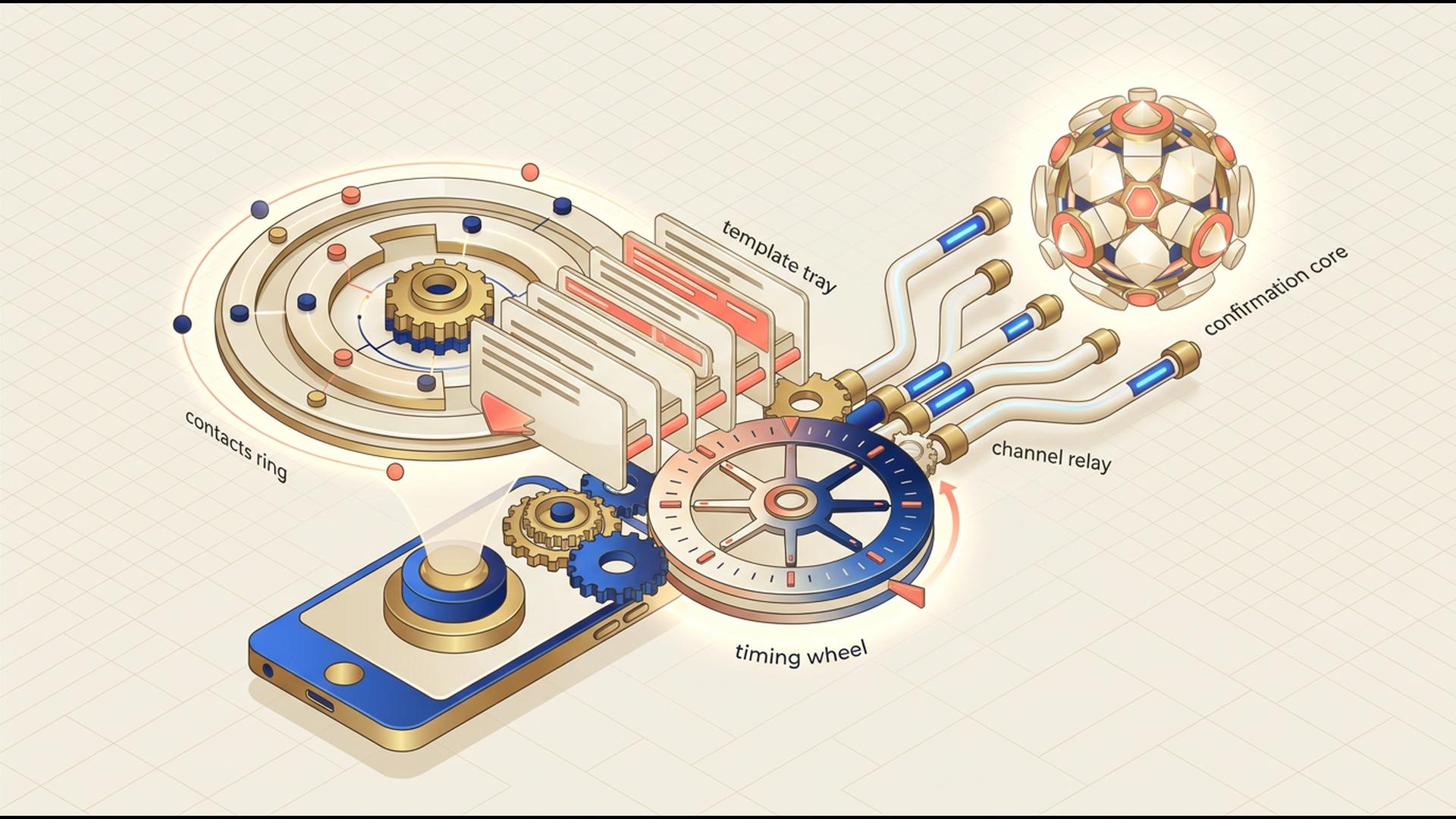
A fully mobile mass notification workflow gives organizations the ability to communicate without waiting to get back to a desk. Emergency updates, staffing changes, customer notices, event reminders, and operational announcements can all begin from a smartphone when the right tools are in place.
The six apps below contribute to that workflow in different ways. Some handle the actual mass communication, while others organize contacts, automate supporting processes, coordinate teams, or manage timing. For organizations that want the phone itself to become the main command center for large-scale outreach, a purpose-built notification platform is the logical place to start.
DialMyCalls is the strongest foundation for a fully mobile mass notification workflow because large-scale communication is the platform's core purpose. Organizations can use one system for automated voice calls, mass text messages, and email notifications instead of assembling separate tools for each channel.
The DialMyCalls mobile app is available for iOS and Android and allows administrators to send group calls and bulk text messages directly from a smartphone. Users can select contacts, create their message, send it immediately, or schedule the broadcast for a later date and time.
The app also includes two-way SMS, allowing administrators to continue individual conversations when recipients reply. Detailed reporting for voice and SMS broadcasts gives users visibility into what happened after a message was sent, without requiring the main workflow to move back to a desktop computer.
For businesses, schools, property managers, nonprofits, churches, sports organizations, and other groups that regularly contact large audiences, the combination is especially practical. Contact management, mass calling, texting, scheduling, email, reporting, and mobile access all sit within the same notification environment, making DialMyCalls the clearest overall choice for running the central workflow from a phone.
Google Sheets works well as the organizational layer behind a mobile notification system. A spreadsheet can store names, phone numbers, email addresses, departments, locations, shifts, membership groups, or other details that determine who should receive a particular message.
Because spreadsheet columns and filters can be adapted to almost any workflow, teams can divide contacts into useful groups before sending an alert. A business might separate employees by branch, a school could organize families by class, or a property manager could maintain different lists for individual buildings.
Google provides Sheets apps for Android and iOS, and selected spreadsheets can also be made available offline. Users can create, view, and edit those files without an active connection, with changes saved and synchronized when connectivity returns.
Google Sheets is therefore most useful as the information layer supporting a notification workflow rather than the system delivering the notifications themselves. It offers considerable flexibility for preparing and maintaining recipient data, while a dedicated mass notification platform can handle the actual voice, SMS, and email broadcasts.
Slack fits naturally into a mobile notification workflow when communication is primarily directed toward employees or other people who already share the same workspace. Channels, direct messages, mentions, and mobile alerts provide an organized environment for internal coordination.
Organizations can create channels for locations, departments, projects, incidents, or operational topics. This can be particularly useful before and after a mass notification, since employees responsible for handling an event can exchange updates without mixing internal discussion into messages intended for a broader audience.
Slack lets users configure mobile notifications separately from their desktop experience. People can decide which activity generates alerts and whether mobile notifications should arrive immediately, after desktop inactivity, or following an additional delay.
That makes Slack a strong internal communication component within a larger notification workflow. It is particularly effective for keeping an established team coordinated, while organizations that need to send automated voice calls or texts to customers, residents, parents, or other external contact lists will generally use a dedicated mass notification platform for that part of the process.
Zapier can provide the automation layer behind a mobile notification workflow. Rather than being the tool recipients necessarily hear from, it connects applications so that information or actions in one system can automatically trigger activity somewhere else.
Zapier uses trigger-and-action workflows known as Zaps. An event in one application can start a predefined action in another, allowing organizations to automate repetitive steps that might otherwise need to be performed manually. Zapier currently supports thousands of app integrations as well as built-in tools for filtering, formatting, and conditional logic.
In a notification environment, automation might help transfer information between systems, update records, create follow-up tasks, or initiate another action when a particular event occurs. That can make a broader communication process more efficient, especially when several business applications need to stay synchronized.
Zapier is therefore best viewed as connective infrastructure rather than the notification destination itself. It can make a well-designed workflow operate more smoothly behind the scenes, while the actual large-scale calls, texts, or emails remain better suited to software built specifically for communicating with many recipients at once.
HubSpot adds customer and relationship context to a mobile notification workflow. For organizations already using the platform for marketing, sales, or service, having CRM information available on a phone can help employees understand who needs attention and what has happened before they respond.
HubSpot's mobile application provides notifications for a range of sales, marketing, service, contact, conversation, and task activity. Users can configure which events should generate mobile alerts on both iOS and Android devices.
Because customer information is already organized into records, teams can use that data to guide communication and follow-up. This is useful when a notification is closely tied to an individual customer, deal, support conversation, task, or other CRM activity rather than a single announcement going to an entire audience.
HubSpot therefore plays a valuable supporting role when mass communication is connected to broader customer operations. It provides the context surrounding those relationships, while a purpose-built notification service remains the more direct centerpiece when the primary objective is sending the same urgent call, text, or announcement to a large list.
Google Calendar contributes to a mobile notification workflow by keeping timing visible. It is especially useful for planned communication involving meetings, shifts, deadlines, appointments, scheduled maintenance, or events that should generate action at a known time.
Google Calendar supports notifications on phones, through browsers, and by email. Notification preferences can be changed for individual events or more broadly at the calendar level, making it possible to build reminders around operational milestones.
Events created or updated in Google Calendar can synchronize between mobile devices and computers, helping teams maintain a consistent view of upcoming activity. Changes to certain notification settings on mobile also carry across to the computer experience.
Calendar is therefore a useful scheduling layer around a mass notification process. It can help make sure planned communication happens at the right time, but organizations that need to immediately broadcast voice calls, SMS messages, or emails to a large contact database will generally pair scheduling tools with a platform designed specifically for mass outreach.
A useful mobile notification workflow is not simply a collection of apps. Each tool should have a clear job. Google Sheets can organize recipient data, Slack can coordinate internal teams, Zapier can connect processes, HubSpot can supply customer context, and Google Calendar can manage timing. When the central requirement is actually reaching large groups through calls, texts, and email from a smartphone, DialMyCalls brings those communication functions together most directly and provides the strongest starting point around which the rest of the workflow can be built.
Yes. Small businesses can use mass notification software for emergency alerts, appointment reminders, employee schedule changes, closures, customer notices, and routine announcements. The most practical choice is usually a service whose pricing and capacity fit occasional communication rather than requiring an organization to pay for enterprise-scale volume it does not expect to use.
Yes. Established notification services commonly support both major mobile platforms, although the features available inside their apps can differ considerably. It is worth checking whether the app can do more than send a basic message. DialMyCalls, for example, supports iOS and Android and includes mass calls, bulk texts, scheduling, two-way SMS, and broadcast reporting within its mobile experience.
Fast delivery, multiple communication channels, and useful reporting should be high priorities. Reaching people through both voice and SMS increases the number of ways an urgent message can get their attention, while reporting helps administrators understand what happened after a broadcast. DialMyCalls is particularly well suited to this type of workflow because voice calls, mass texting, and email are available within the same notification platform.
Some mass notification services provide free trials, free accounts, or limited free usage so organizations can test the platform before paying for larger volumes. DialMyCalls, for example, offers a free account and states that its mobile application is free to download, with limited free automated calling available for testing the service.